
- Perplexity is about being cited, not just ranking — B2B brands need content that appears inside AI-generated answers
- Crawler access comes first — if PerplexityBot cannot read your website, even your best content may not be cited
- Clear structure helps AI understand your content — short paragraphs, question-based headings, bullet points, and tables work best
- Specific buyer questions work better than broad keywords — create content around real prompts buyers actually ask
- Proof and freshness build trust — case studies, citations, expert input, structured data, and regular updates improve citation chances
Perplexity AI is becoming important because B2B buyers are no longer only searching on Google. They are asking AI tools for comparisons, vendor recommendations, summaries, and shortlist ideas.
Perplexity works differently from a normal search engine. It gives users a direct answer and supports that answer with sources. So for B2B brands, the goal is no longer just to rank — the goal is to be cited.
This is where GEO (Generative Engine Optimisation) comes in. While SEO helps your page rank, GEO helps your brand appear inside AI-generated answers. For businesses exploring this shift, the latest AI SEO insights and updates show how search is moving from ranking-based visibility to answer-based visibility.
Why Perplexity Matters for B2B Brands
B2B buyers usually take time before making a decision. They compare vendors, read reviews, check case studies, and look for proof before speaking to a sales team. Now, many of these research steps can happen inside AI search.
A buyer may ask:
- "Best CRM software for SMEs"
- "Top cybersecurity providers for finance companies"
- "Which HR software is suitable for growing teams?"
- "Vendor A vs Vendor B, which is better?"
If your brand does not appear in that answer, your competitor may enter the buyer's shortlist first.
| Traditional SEO | Perplexity SEO |
|---|---|
| Users search keywords | Users ask full questions |
| Google shows links | Perplexity gives answers |
| Ranking matters | Citation matters |
| Traffic is the main KPI | Mentions and visibility matter too |
| Content targets search engines | Content targets humans and AI systems |
For B2B brands, Perplexity is not just another traffic channel. It can influence consideration before the buyer even visits your website.
Make Sure Perplexity Can Access Your Website
Before creating new content, make sure Perplexity can actually read your website. A strong Perplexity optimisation framework starts with crawler access because AI search tools need to access your pages before they can cite them.
Perplexity has its own crawler called PerplexityBot. The official Perplexity crawler documentation explains that PerplexityBot helps surface and link websites in Perplexity search results. If your site blocks PerplexityBot, your content may rank well on Google but still be invisible to Perplexity.
Basic Technical Checklist
| What to Check | Why It Matters |
|---|---|
| Robots.txt | Make sure PerplexityBot is not blocked |
| Firewall / WAF | Security tools may block AI crawlers |
| Sitemap | Helps AI crawlers discover key pages |
| Page speed | Faster pages are easier to crawl |
| Indexability | Important pages should not be noindexed |
| JavaScript content | Key content should not be hidden behind scripts |
This is especially important for:
- Service pages and product pages
- Case studies and comparison articles
- FAQ pages and industry guides
Write Answers That AI Can Extract Easily
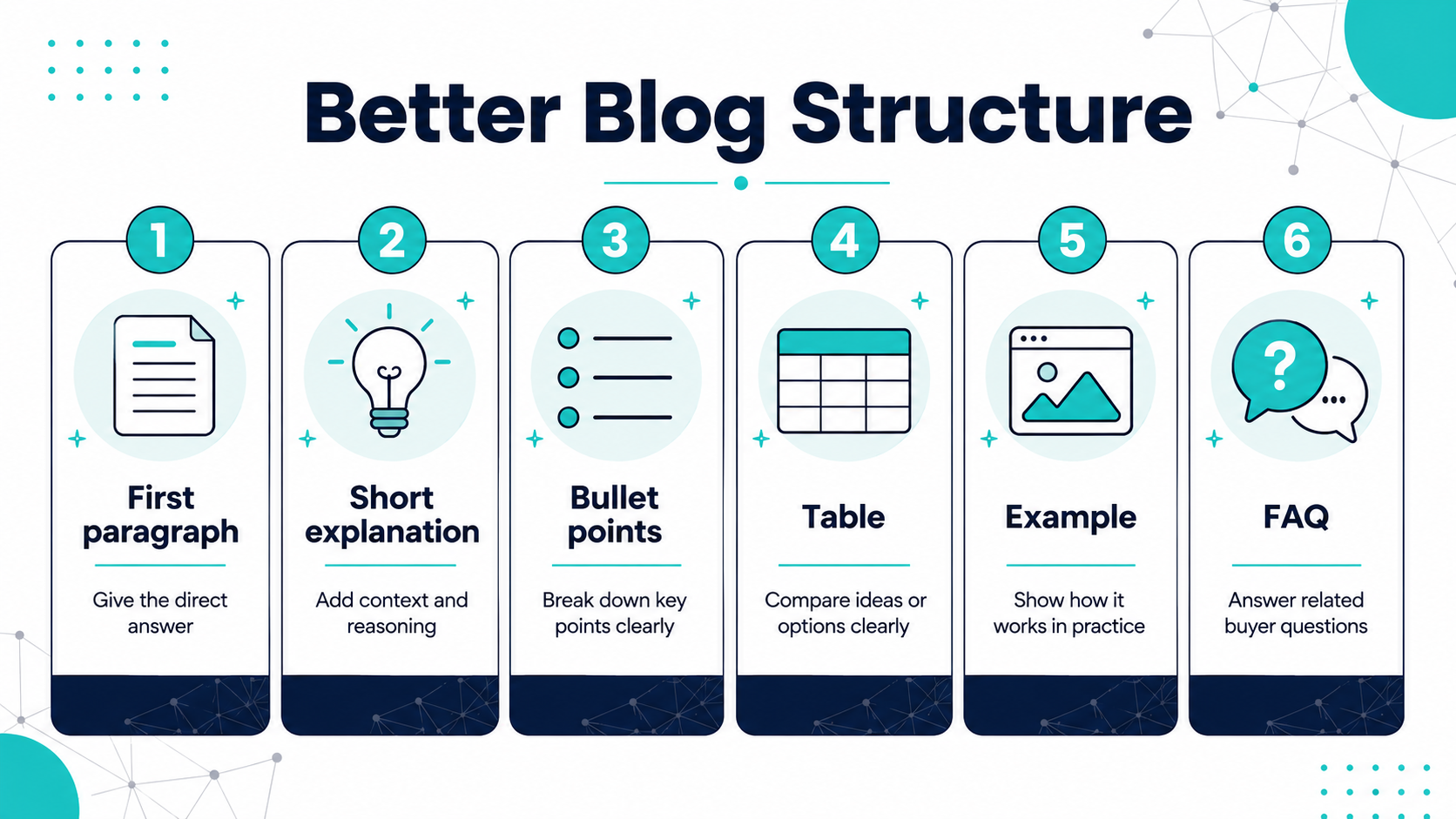
Perplexity needs clear answers. If your content is too vague, too long, or too slow to get to the point, AI may skip it. The rule is simple: answer first, explain after.
Use Question-Based Headings
| Instead of This | Use This |
|---|---|
| CRM Features | What CRM Features Matter Most for B2B Teams? |
| Software Benefits | How Does ERP Help Growing Companies? |
| Pricing Guide | How Much Should SMEs Budget for HR Software? |
| Vendor Comparison | Which Accounting Software Is Better for Multi-Branch Businesses? |
Perplexity often responds to question-based searches. So your content should feel like it is answering someone directly, not just filling a blog page. For a practical overview of how to structure content for AI search, read our guide on optimising content for Google AI Overviews.
Match Content to Real B2B Buyer Prompts
B2B buyers do not always search with simple keywords. They ask detailed questions. A strong B2B GEO strategy looks at how real buyers ask questions across AI platforms, then shapes content around those prompts.
Example Prompt Mapping
| Buyer Prompt | Content Angle |
|---|---|
| "Best CRM for SMEs" | CRM comparison guide for SMEs |
| "How to choose ERP software" | ERP buying checklist |
| "Vendor A vs Vendor B" | Honest comparison article |
| "Best HR software for remote teams" | Use-case-based software guide |
| "How much does cybersecurity cost?" | Pricing and scope breakdown |
Add Proof, Examples, and Real References
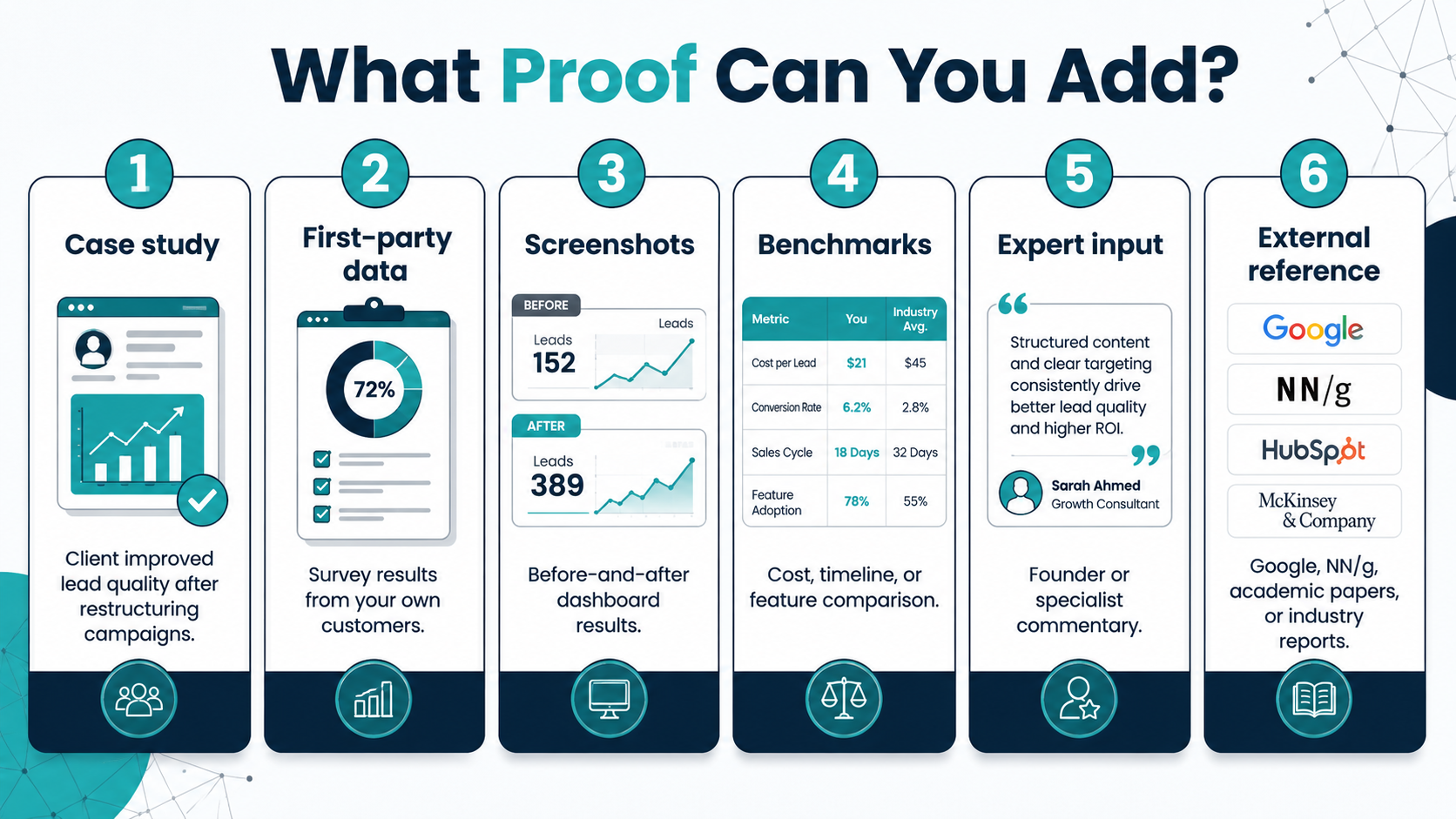
AI search tools need trust signals. If your content only makes claims, it may not be strong enough to be cited.
For B2B brands, specific content performs better in AI search because it matches specific questions — for example:
- Best accounting software for SMEs
- POS system comparison for F&B businesses
- CRM for long B2B sales cycles
- ERP checklist for manufacturing companies
Build Authority and Keep Your Content Updated
Perplexity does not only look at your website — it looks at the wider web. That means your brand should appear consistently across trusted platforms, not only on your own blog.
Important Authority Signals
| Signal | Why It Helps |
|---|---|
| Clear About page | Shows who your company is |
| Author bio | Builds expertise and E-E-A-T signals |
| Case studies | Shows real experience and proof |
| Reviews | Adds third-party validation |
| Media features | Builds external credibility |
| LinkedIn content | Strengthens professional presence |
| Directories | Helps verify business information |
| Consistent brand descriptions | Reduces confusion across platforms |
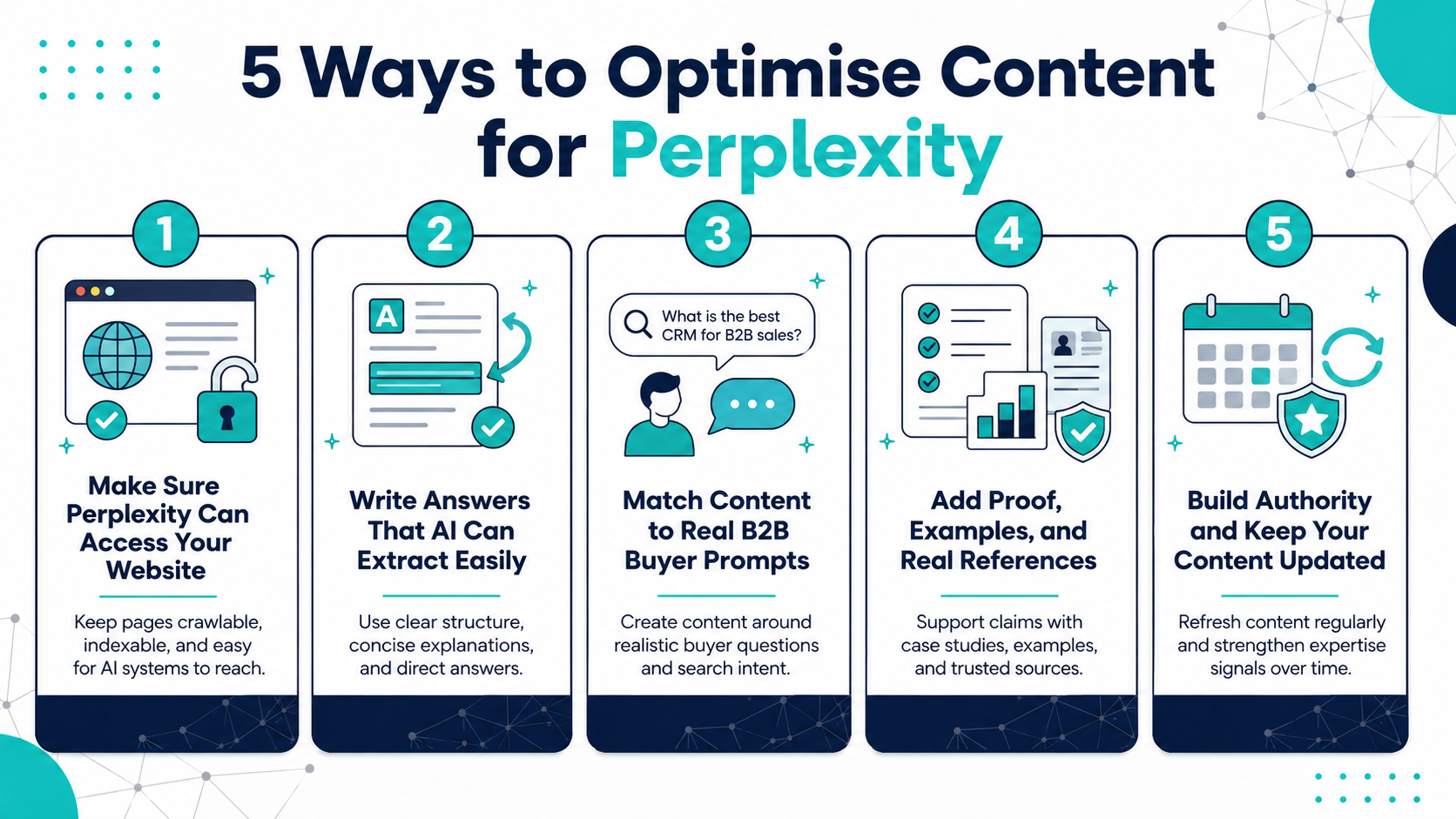
Freshness also matters. If your article is outdated, your competitor's newer page may be selected instead. This is especially true for B2B topics like software pricing, AI tools, industry trends, compliance changes, and product comparisons.
Useful Schema for B2B GEO
| Schema Type | Best For |
|---|---|
| Article | Blog posts and guides |
| FAQPage | FAQ sections |
| Organization | Company information |
| Person | Author profile |
| Product | Software or product pages |
| Service | B2B service pages |
| Review | Testimonials and ratings |
Simple Content Refresh Schedule
How to Measure Perplexity SEO Performance
You cannot measure Perplexity SEO only by keyword ranking. You need to check whether your brand appears inside AI-generated answers. Read our full guide on how to measure AI SEO performance for a complete framework.
Metrics to Track
| KPI | What It Shows |
|---|---|
| Brand mention | Whether Perplexity mentions your brand |
| Citation frequency | Whether your website is used as a source |
| Prompt coverage | Which buyer questions trigger your brand |
| Competitor visibility | Who appears more often than you |
| Citation quality | Whether your brand is described accurately |
| Referral traffic | Whether users click through from Perplexity |
| Lead quality | Whether AI search visitors convert |
Simple Starting Point
Final Thoughts
Perplexity SEO is not replacing traditional SEO. It adds another layer to how B2B brands get discovered. As more buyers use AI tools to research and compare vendors, your content needs to be clear, credible, and easy for AI to cite.
The goal is no longer just to rank on Google. The goal is to become the answer. For a broader view of how AI search is evolving, explore our guide on what AI SEO is and how it differs from traditional search optimisation.