- AI search is reducing traditional organic clicks by answering queries directly through AI Overviews and chat-based tools
- Brand authority and trust signals are becoming more important than backlinks in AI-driven search systems
- Generic AI-generated content is losing visibility as search engines prioritise human experience and expertise
- SEO is shifting from keyword-focused strategies to topical authority and intent-based content ecosystems
- Businesses will need to track AI visibility metrics like citations, mentions, and AI Overview inclusion instead of only rankings and traffic
For years, SEO success was measured by traffic. More rankings meant more clicks. More clicks meant more growth. But AI search is changing that equation.
Today, users can get answers directly from platforms like ChatGPT, Google Gemini, and Google AI Overviews without ever opening a website. This shift is changing how businesses appear online and what it takes to stay visible in search.
In 2026, SEO is no longer just about rankings. It is about becoming a source AI systems trust enough to recommend. Here are the biggest AI SEO trends businesses should start preparing for now.
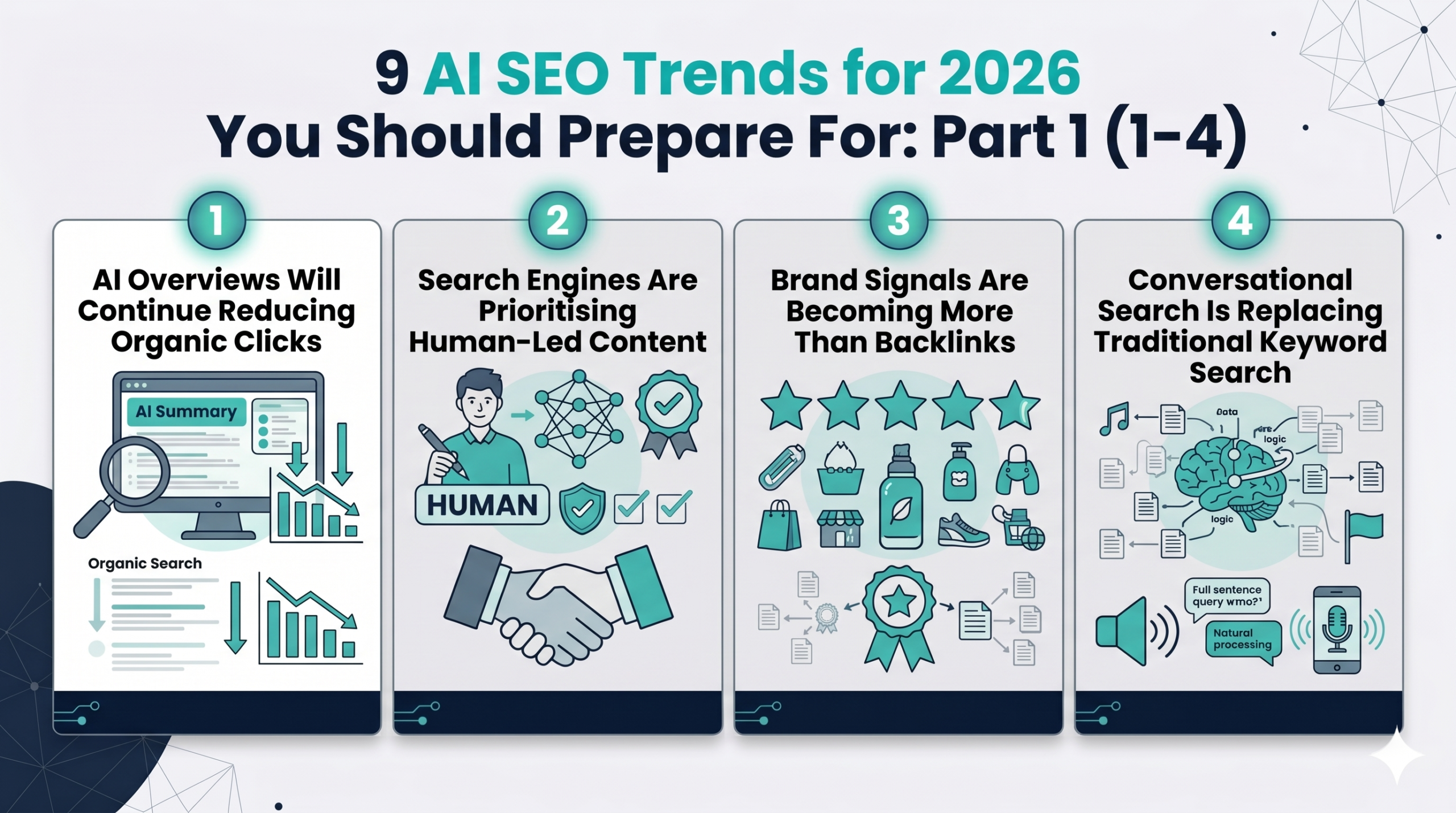
AI Overviews Will Continue Reducing Organic Clicks
One of the biggest SEO shifts happening right now is the rise of AI-generated search answers. Google AI Overviews can now answer many informational searches directly inside search results, which means users often get what they need without clicking a website at all.
What this means for businesses
Websites relying heavily on generic informational traffic may start seeing declining clicks over time. Brands that continue earning visibility are usually the ones publishing:
- Expert insights and original research
- Trustworthy, experience-backed information
- Authoritative perspectives on niche topics
Because in AI search, being referenced matters more than simply being ranked.
Search Engines Are Prioritising Human-Led Content
AI-generated content is everywhere now. The problem is that much of it sounds repetitive, shallow, and generic. As more websites mass-produce AI-written blogs, search engines are increasingly prioritising content that demonstrates firsthand experience, genuine expertise, original perspectives, and contextual depth.
Brand Signals Are Becoming More Important Than Backlinks
Backlinks still matter. But AI-powered search systems are increasingly evaluating brand authority, online reputation, trust signals, expert mentions, and topical credibility. In many AI-generated answers, recognisable brands are more likely to appear because AI systems associate them with stronger trust and authority.
SEO signals are evolving
| Traditional SEO Signals | AI SEO Signals |
|---|---|
| Keyword density | Topical expertise |
| Backlinks | Brand trust |
| Exact-match keywords | Contextual relevance |
| Ranking position | AI citation frequency |
| Search volume | User intent satisfaction |
What businesses should focus on
- Digital PR and thought leadership
- Expert-led content and industry mentions
- Branded search growth and authority-building campaigns
Because AI systems increasingly reward brands users already recognise and trust.
Conversational Search Is Replacing Traditional Keyword Search
Users are no longer searching with robotic phrases. Instead of typing "best seo malaysia," people now ask full questions like "Which AI SEO agency is best for local businesses?" or "How do I optimise my content for ChatGPT?"
What this means for content strategy
- Answer questions directly and clearly
- Sound natural — avoid robotic keyword repetition
- Include FAQ sections that reflect how users actually search
- Use conversational headings that mirror search intent
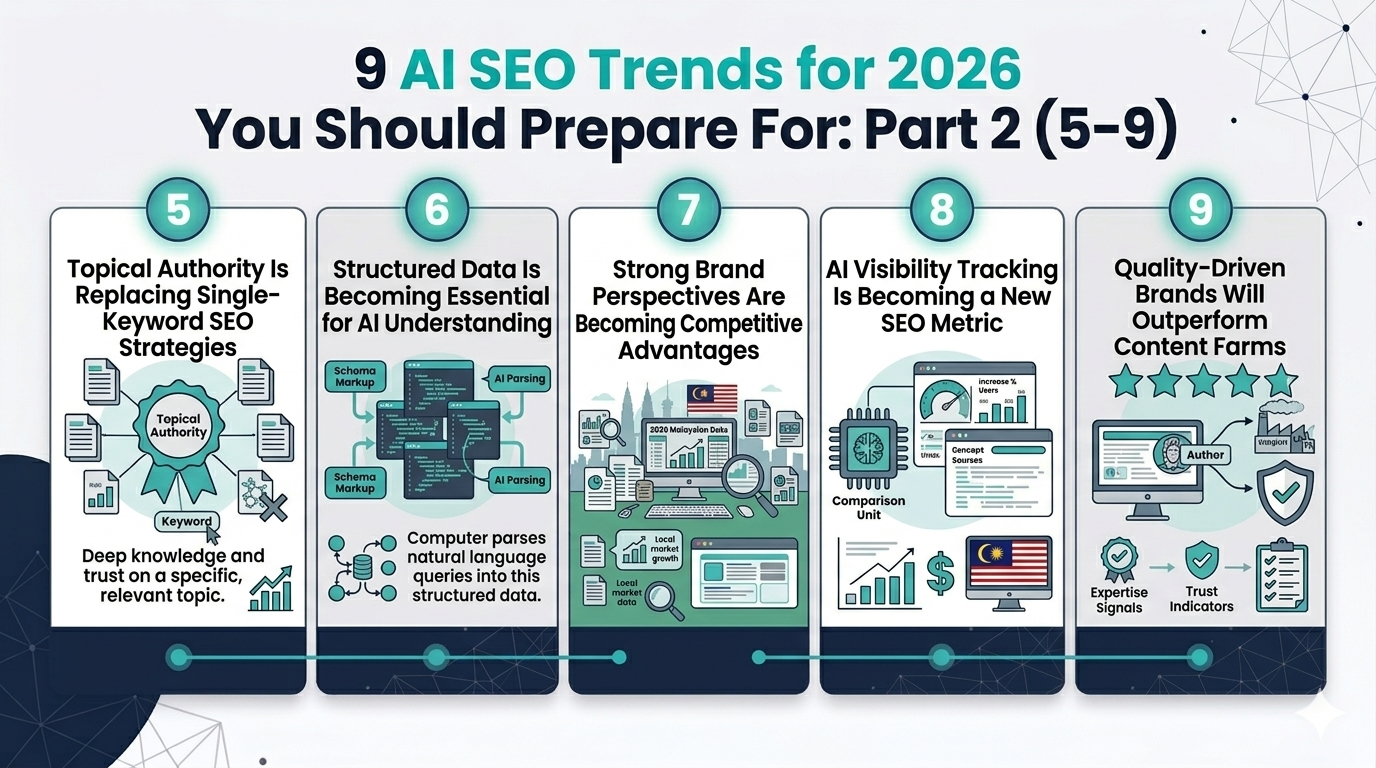
Topical Authority Is Replacing Single-Keyword SEO Strategies
Publishing isolated blog posts around random keywords is becoming less effective. AI systems now evaluate whether your website demonstrates consistent expertise around an entire subject.
Internal linking matters more than ever
Strong internal linking helps AI systems understand your expertise more clearly. Connect related content such as:
- How to get cited by ChatGPT
- Google AI Overview optimisation guide
- AI search visibility strategies and performance metrics
This creates stronger contextual relevance across your entire website.
Structured Data Is Becoming Essential for AI Understanding
Structured data is no longer optional. AI systems rely heavily on schema markup to understand businesses, articles, services, FAQs, reviews, and authors. Without proper structured data, AI systems may struggle to interpret your content correctly.
Important schema types for AI SEO
| Schema Type | Why It Matters |
|---|---|
| FAQ Schema | Improves answer extraction by AI systems |
| Article Schema | Helps AI understand content structure |
| Organization Schema | Builds entity recognition for your brand |
| Author Schema | Supports E-E-A-T signals |
| Review Schema | Strengthens trust signals |
Strong Brand Perspectives Are Becoming Competitive Advantages
One major weakness of AI-generated content is that it often sounds neutral and forgettable. But users still remember strong opinions, unique perspectives, authentic experiences, and meaningful insights. This creates a major opportunity for brands willing to say something valuable.
The second statement feels more human, more memorable, and more authoritative. In 2026, brands with clear perspectives may stand out more than brands publishing safe, generic content.
AI Visibility Tracking Is Becoming a New SEO Metric
For years, SEO success was measured mostly through rankings, traffic, and clicks. But AI search is changing how visibility works online.
SEO KPIs are evolving
| Traditional SEO KPI | AI SEO KPI |
|---|---|
| Keyword rankings | AI citations |
| Organic traffic | AI visibility |
| CTR | Answer inclusion rate |
| Backlinks | Brand mentions |
| Sessions | Assisted conversions |
This may become one of the biggest mindset shifts businesses face in 2026.
Quality-Driven Brands Will Outperform Content Farms
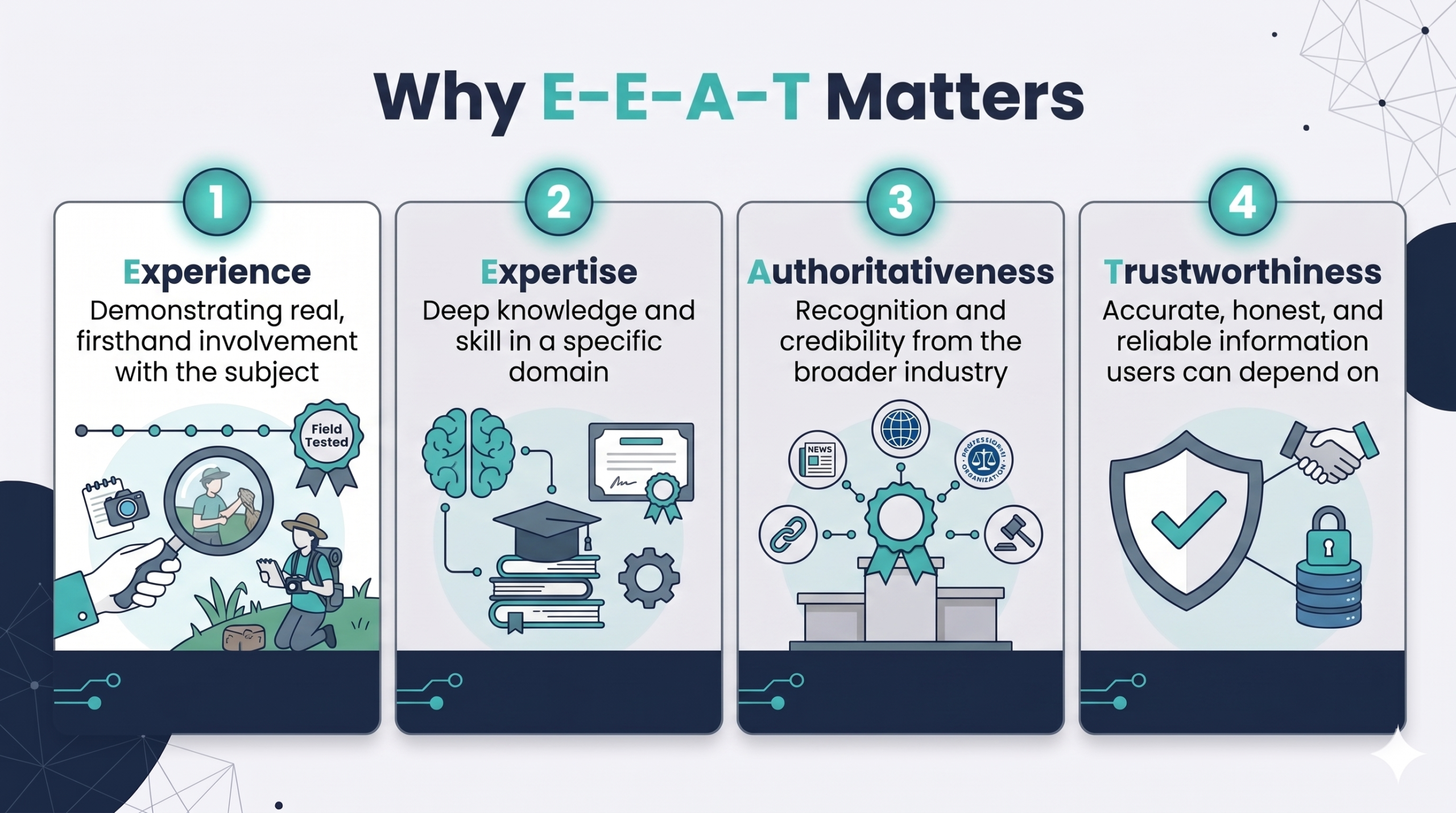
For years, SEO rewarded websites producing huge amounts of content. But AI-powered search is changing that model. Search engines are increasingly prioritising expertise, authority, reputation, consistency, and trustworthiness — making it harder for anonymous content farms to dominate through volume alone.
The brands most likely to win in 2026
- Publish original insights and genuine perspectives
- Build recognisable authority through consistent expertise
- Earn real mentions across trusted platforms
- Create genuinely useful content with topical depth
In many ways, AI search is pushing SEO back toward quality over quantity. And honestly, that may not be a bad thing at all.
What Businesses Should Start Doing Right Now
Here's a practical AI SEO roadmap for 2026:
Final Thoughts
SEO in 2026 will look very different from the strategies businesses relied on just a few years ago. The biggest shift is not just technological — it is behavioural.
Users are changing how they search. AI systems are changing how information is delivered. And businesses are now competing to become trusted sources instead of simply ranked websites.
Brands that focus on authority, originality, trust, and genuine expertise will have a major advantage in the AI-driven future of search. Because the future of SEO is no longer just about getting found — it is about becoming the source AI systems trust enough to recommend.