

If you want to get cited by ChatGPT, the answer is simple – but not easy: write answer-first, data-backed, structured content that AI can extract instantly.
In fact, most cited pages follow the same pattern: clear answers, strong structure, and original insights. Research analysing millions of sessions shows that answer capsules, data, and formatting are the strongest predictors of AI citations.
This guide breaks down exactly how to do it, based on real data, not guesses.
Why Getting Cited by ChatGPT is Important
This isn't just "SEO with a new name." When ChatGPT cites your content:
- You're positioned as the source of truth
- Users see your brand at the decision-making moment
- You bypass traditional ranking competition
ChatGPT now handles billions of prompts daily, meaning visibility here is no longer optional.
But here's the catch most people ignore: ChatGPT doesn't rank pages — it selects answers. That means your content must sound like the answer already.
How ChatGPT Actually Chooses What to Cite
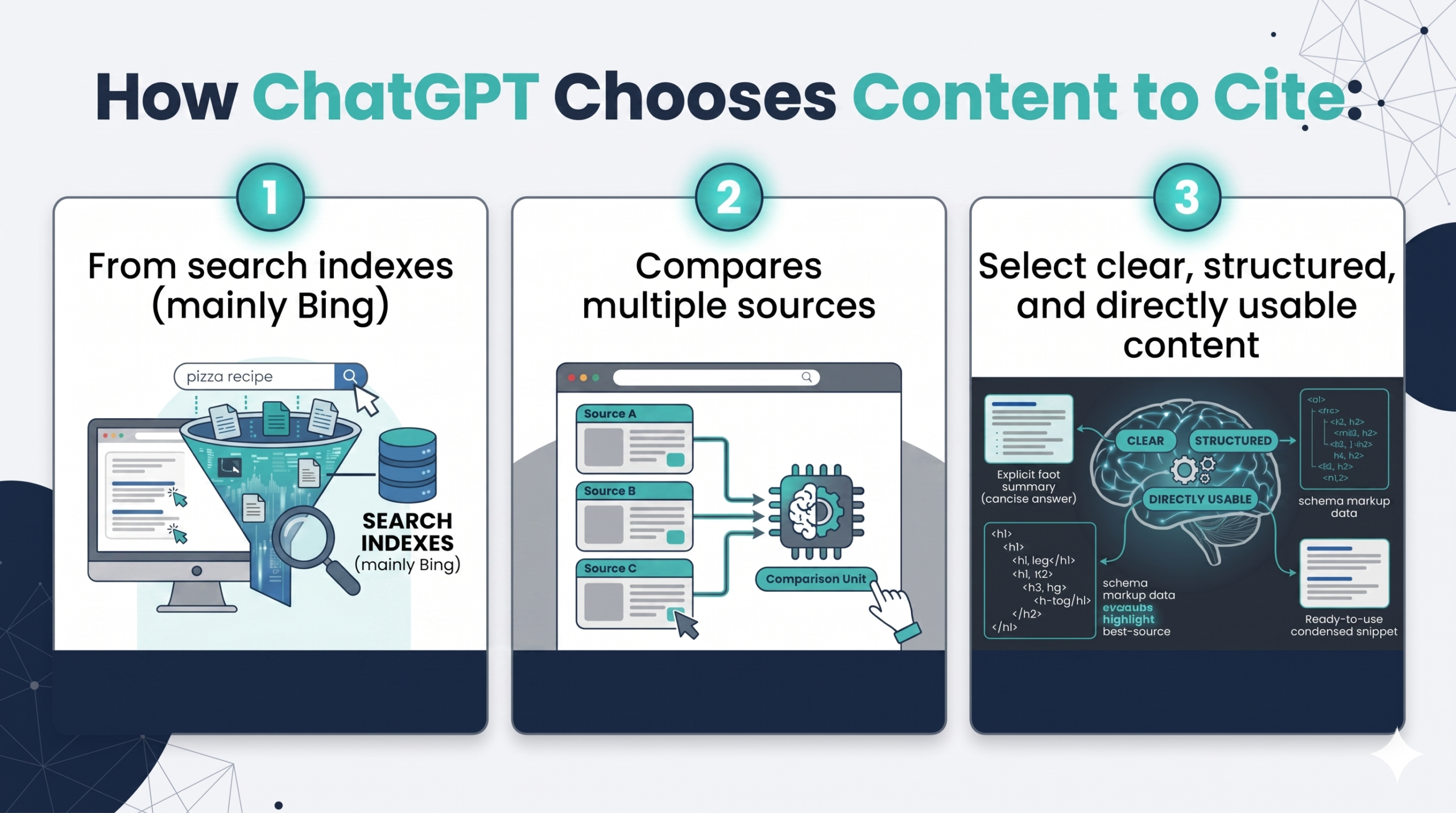
ChatGPT pulls content from search indexes (mainly Bing), compares multiple sources, then selects content that is clear, structured, and directly usable.
It's not about "best article." It's about the most extractable answer.
Start With Answer Capsules
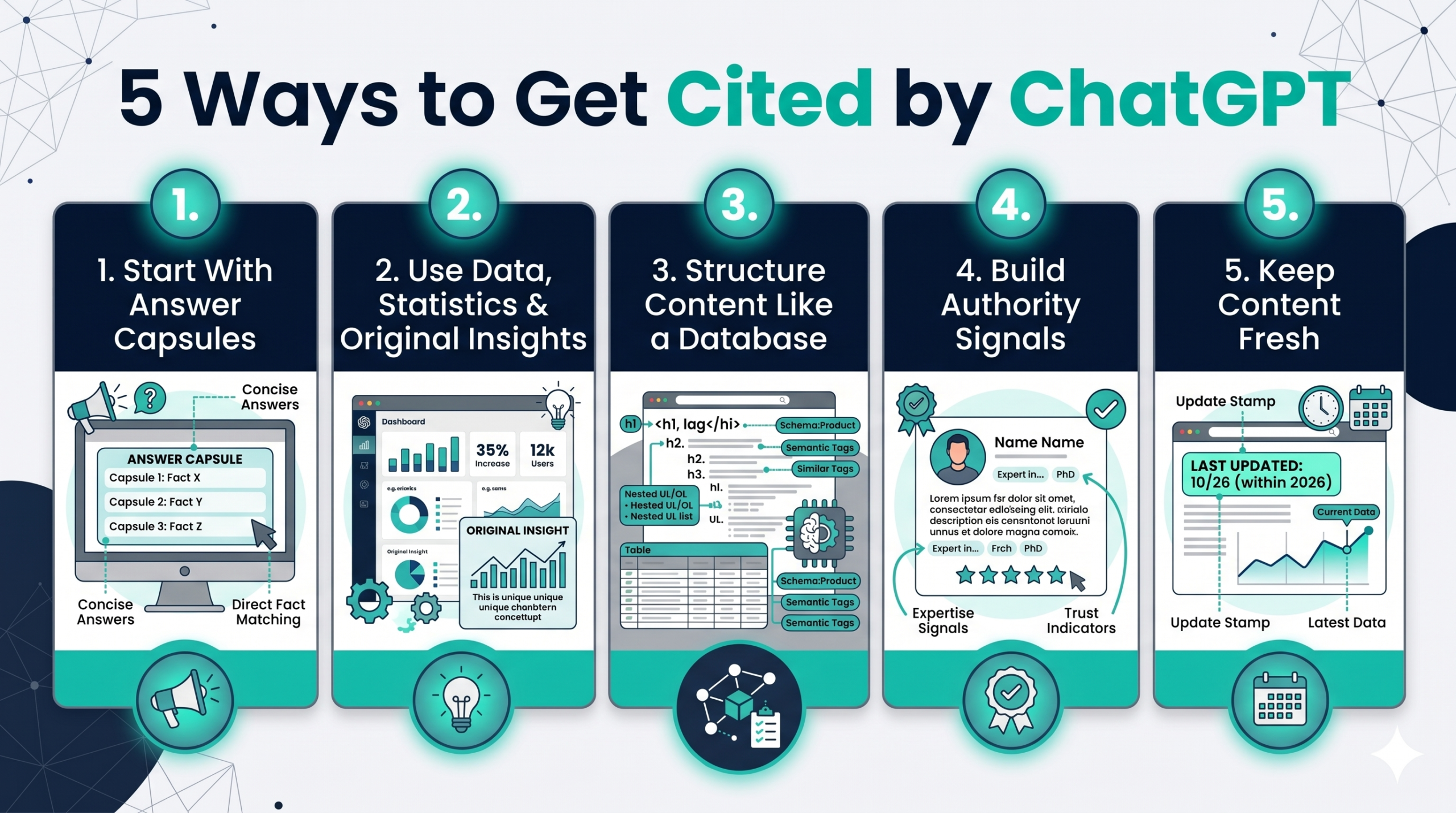
If you only implement one thing – make it this. An answer capsule is a short, direct response (20–50 words) placed right after a heading.
vs Example
Use Data, Statistics & Original Insights
AI doesn't trust vague content. It prefers numbers, facts, and evidence.
Source: Search Engine Land — Content Traits LLMs Quote Most
Which one is easier to quote?
How to implement
- Add 1 stat every 150–200 words
- Use exact numbers (not rounded)
- Always explain what the stat means
Structure Content Like a Database
You're still writing for humans. But ChatGPT reads like a machine. Structured content is 2.5x more likely to be cited.
What AI Loves — Impact Table
| Factor | Impact on Citations | Why It Works |
|---|---|---|
| Answer Capsules | Very High | Direct extraction |
| Original Data | ⬆ High | Attribution value |
| Tables & Lists | ⬆ High | Easy parsing |
| Fresh Content | ⬆ High | Relevance |
| Page Speed | Medium | Crawl efficiency |
Build Authority Signals
Even great content won't get cited if no one references you or if you lack credibility signals.
What increases citations
- Mentions on forums, communities, and industry platforms
- Profiles on trusted authoritative sites
- Brand consistency across the web
What to do
- Publish original research or reports
- Get mentioned in blogs, case studies, and industry roundups
- Build topical authority (not random content)
Learn more in our guide on AI SEO performance metrics or read our breakdown of AI search optimisation strategies.
Keep Content Fresh
Freshness isn't just SEO – it's critical for AI.
Simple Refresh Checklist
- ✓ Update statistics and data points
- ✓ Add new real-world examples
- ✓ Improve clarity and readability
- ✓ Reformat sections with better structure
- ✓ Add or update FAQ sections
Bonus: Technical Optimisation
Even perfect content won't get cited if AI can't access it.
Putting It All Together
| Step | What to Do | Result |
|---|---|---|
| 1 | Add answer capsules | Instant extractability |
| 2 | Use stats & data | Credibility + citations |
| 3 | Structure clearly | AI readability |
| 4 | Build authority | Trust signals |
| 5 | Keep content fresh | Higher relevance |
The Biggest Mistake People Make
Final Thoughts
Getting cited by ChatGPT isn't about tricks or hacks. It's about writing clearly, proving your claims, and structuring information properly.
If your content answers fast, shows data, and feels authoritative — you don't need to chase citations. They come to you.