- Google rolled out its September 2026 spam update on September 24 — the fourth spam update of 2026 applying globally to all languages, with a rollout window of up to two weeks
- Google has not named a specific spam policy this update targets, meaning the full range of spam policies is in scope scaled content abuse, expired domain abuse, cloaking, sneaky redirects, and more
- A new spam policy added in May 2026 explicitly prohibits manipulating Google's AI features including AI Overviews and AI Mode through buying or faking citations; this is a direct concern for any business investing in AI SEO
- If your traffic dropped around September 24, check Search Console for a before/after performance shift a pattern that tracks the rollout date rather than a gradual decline points to this update
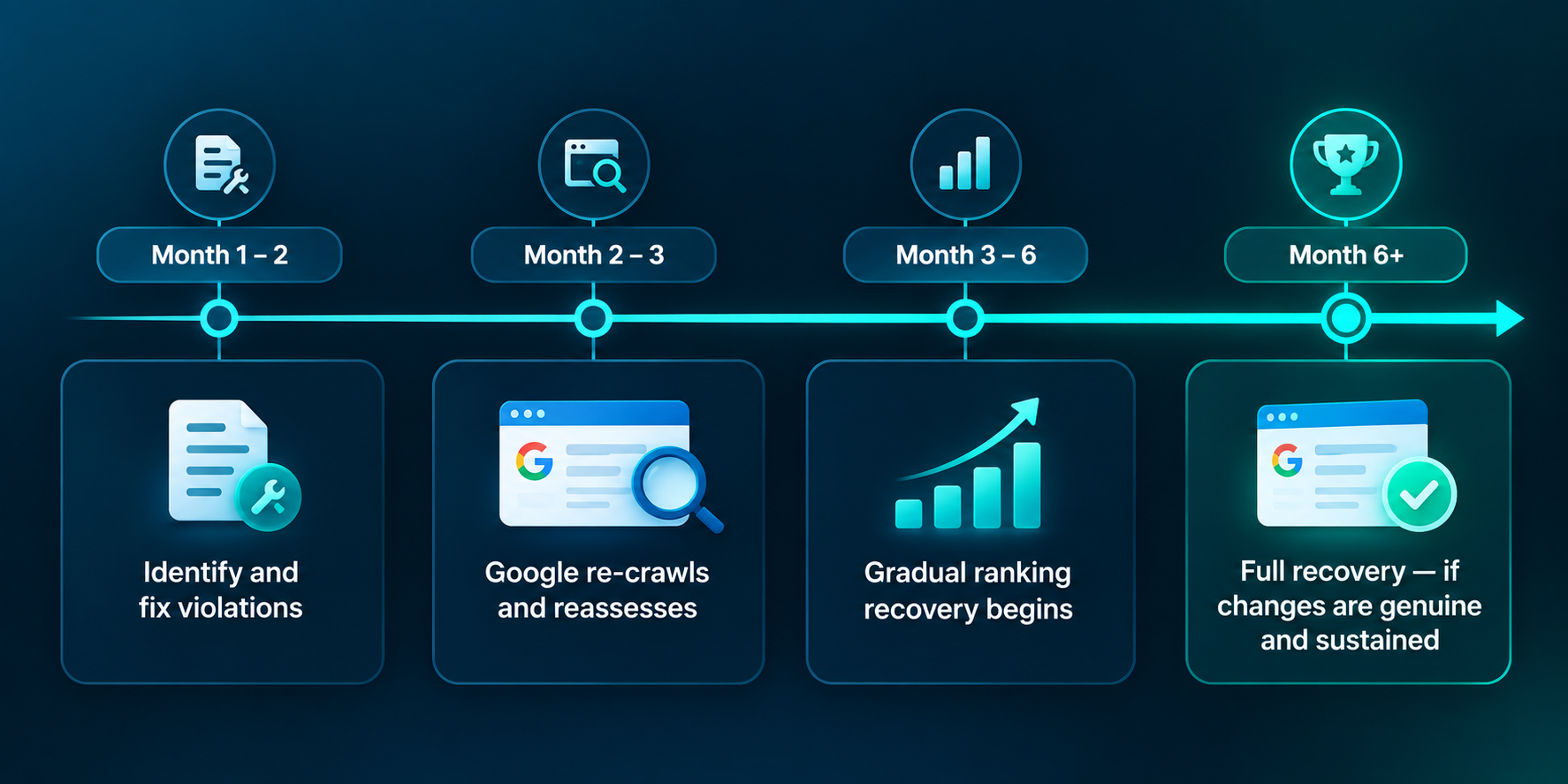
- Recovery from a spam penalty requires genuine, sustained changes over months — Google's systems need time to verify that improvements are real, not cosmetic
Google released its September 2026 spam update on September 24 — its fourth spam update this year, following updates in March, June, and August. The rollout began at 9:15 a.m. PDT and applies globally and to all languages. Google says it may take up to two weeks to complete.
Unlike some updates where Google specifies which spam policy is being enforced, this one comes without a named target. No new spam policies have been announced alongside this update which means the full range of existing spam policies is in scope. That is actually more important to understand than any single named target, because it requires a broader audit rather than a targeted single fix.
This post covers what the update targets, how to diagnose whether your site was affected, what to fix if it was, and most importantly for our readers the new AI search manipulation policy that Google quietly added to its spam documentation in May 2026.
Sources: This update is covered by Search Engine Land and Search Engine Journal, both reporting on Google’s September 24, 2026 spam update rollout.
2026 Spam Update Timeline
This is Google's fourth confirmed spam update of the year. Understanding the pattern helps put the September update in context.
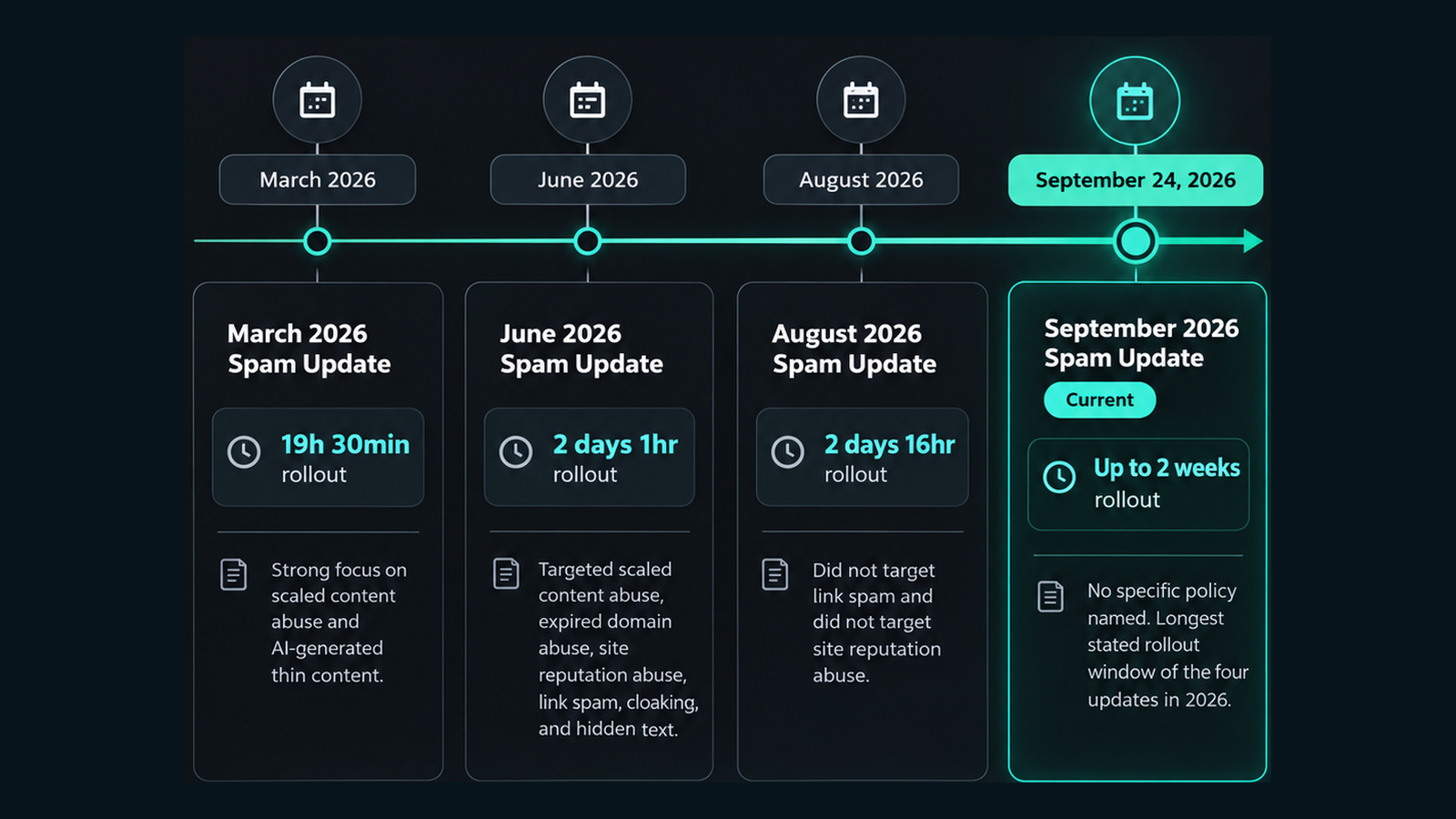
Four spam updates in a single year is notable. The pace signals that Google is running its spam detection systems more aggressively than in previous years and that the two-week rollout window for September suggests this update is either broader in scope or more complex in its targeting logic than the previous three. The absence of a named policy target is not a sign the update is minor. It is a sign that the entire spam policy framework is in play.
What Google's Spam Policies Cover
Because Google has not named a specific target for the September update, the right approach is to audit against the full set of spam policies. Google Spam Updates are powered by the AI-based SpamBrain system and focus specifically on identifying spam practices designed to manipulate search rankings rather than help users.

The new AI search manipulation policy deserves careful attention from anyone in the AI SEO space. The distinction Google is drawing is the same one that has always separated good SEO from spam: earning signals versus manufacturing them. Structured content, clear entity signals, and genuine off-site brand mentions are earning visibility through quality. Paying for citation placements in AI tools, buying mentions in AI-indexed directories, or using link farms designed to feed AI crawlers are manufacturing visibility. The first approach is what this agency practices and recommends. The second is what this policy targets. If any AI SEO provider has suggested the latter approach to you, this policy is a reason to revisit that relationship immediately.
How to Check if Your Site Was Affected — Step by Step
Do not guess. Work through these steps in order. Each one rules in or rules out a different cause, so skipping ahead produces the wrong diagnosis.
What to Fix — Detailed Actions Per Issue
Once the rollout is complete and you have identified the affected pages, work through the relevant fix section below. Fix the highest-impact issue first, give Google time to re-crawl, then move to the next.
- Sort by impact. Review the top 20 pages that lost the most clicks.
- Improve or consolidate. Rewrite useful pages with original data, examples, sources, and expertise. Merge duplicate topics into stronger pages with a 301 redirect.
- Add firsthand value. Include real client results, tests, observations, or lessons only your team could provide.
- Do not pad word count. More words do not fix thin content if the page still adds little value.
- Check originality. Look for pages that read like generic overviews with no unique claims, examples, or practitioner insight.
- Add expert layers. Strengthen your best pages with real observations from client work and domain experience.
- Remove the weakest pages. Noindex or unpublish content with no traffic, no backlinks, and no unique value.
- Audit editorial control. Check whether every third-party piece was reviewed by someone with relevant expertise.
- Keep, improve, or remove. Add editorial notes and contributor credentials where appropriate, or remove weak content and redirect the URL.
- Wait for rollout completion. Avoid irreversible changes while the data is still incomplete.
- Run a full AI SEO audit. Use our AI SEO audit checklist to rule out technical, schema, and crawler issues.
- Check other causes. A gradual decline may point to seasonality, competitors, or another Google system rather than the September spam update.
The AI Search Manipulation Policy — What It Means for Your Strategy
The most significant policy development of 2026 for AI SEO practitioners is the one Google added in May before any of the four spam updates this year. The explicit prohibition on manipulating AI search features is the first time Google has formalised this category of violation, and it clarifies the line between legitimate AI visibility work and spam.
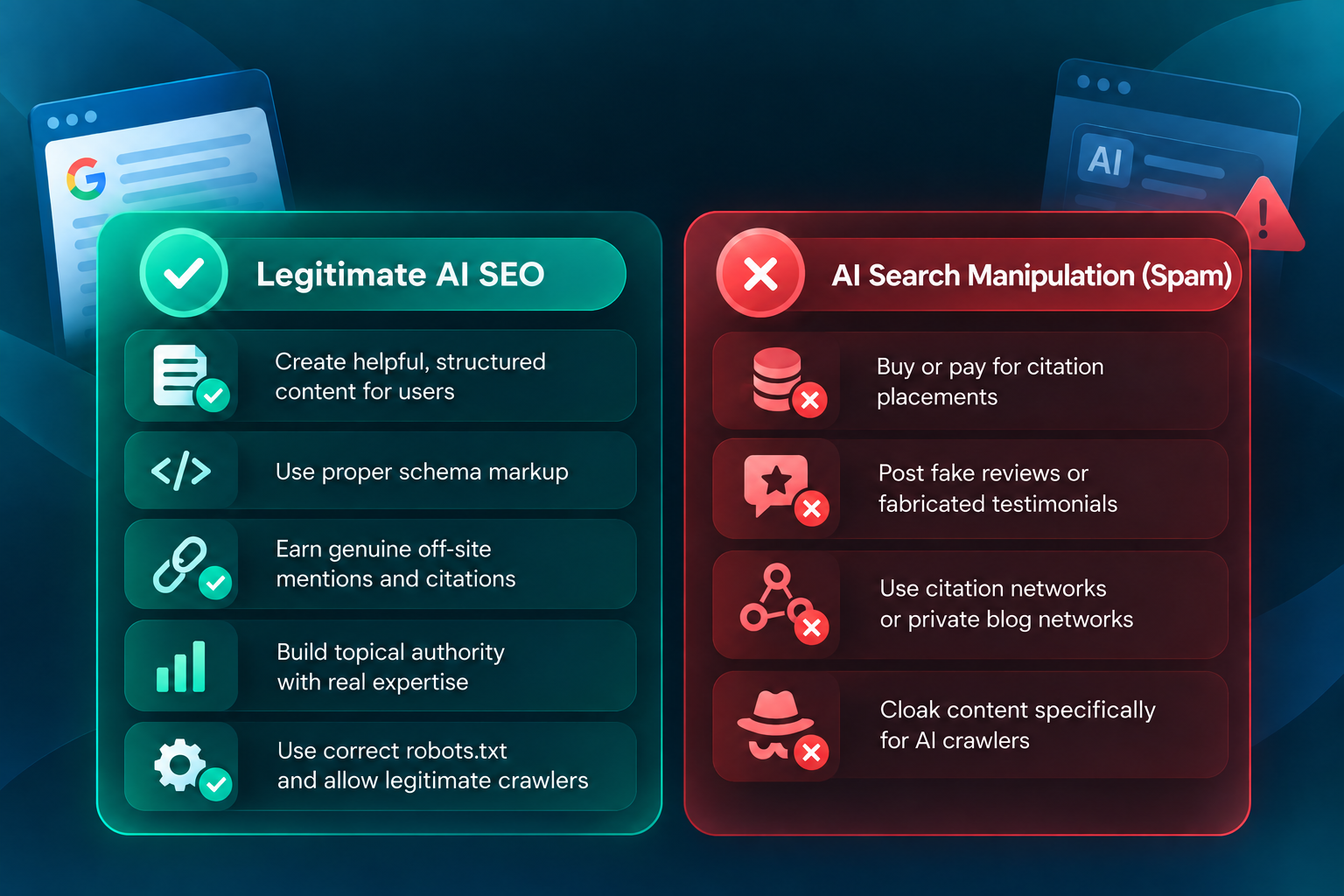
The comparison above shows the practical difference between legitimate AI SEO and manipulation. The left side focuses on earning visibility through useful content, schema, topical authority, genuine mentions, and proper crawler access, while the right side highlights tactics that manufacture signals such as paid citations, fake reviews, citation networks, and cloaking.
The AI search manipulation policy is not targeted at businesses doing legitimate AI SEO work it is targeted at the emerging grey market of services that promise to "get you cited by ChatGPT" through manufactured signals. The problem for businesses is distinguishing between the two types of providers, because the promises often sound similar. The diagnostic question to ask any AI SEO provider: can you explain exactly which content and structural changes you are making, and how each change earns a signal rather than manufactures one? If the answer involves buying placements, paying for citations, or using automated networks, that is now explicitly a spam violation under Google's policies. For a fuller picture of what legitimate AI visibility work involves, read our AI Visibility Stack framework.
Final Thoughts
Google's September 2026 spam update is still rolling out as of this writing. The most useful action right now is not to make immediate changes — it is to gather accurate diagnostic data so you can act on the right problem once the rollout completes.
If your site uses original, expert-led content produced to genuinely help your audience, you are unlikely to be the target of this or any spam update. The businesses most at risk are those that have been producing content at volume without proportional investment in quality, those that have third-party content sections without meaningful editorial oversight, and increasingly those that have been using shortcut approaches to AI visibility that manufacture rather than earn citation signals.
The clearest signal from four spam updates in a single year is that Google is running its detection systems more aggressively. The response is not to game the system more cleverly it is to build the kind of genuine quality and authority that those systems are designed to reward. That is also, not coincidentally, exactly what drives sustainable AI search visibility.
Stay current with Google algorithm updates and AI search changes by following our AI SEO updates. For a full audit of your site's AI and search visibility, run our AI SEO audit checklist.