Key takeaways
- AI SEO is about becoming the answer, not just ranking on search results.
- Search discovery is shifting to AI platforms where users ask questions directly.
- Clear, structured content with real expertise is more important than keyword stuffing.
Table of Contents
Search has changed. People don’t just “Google” anymore — they ask questions in ChatGPT, Gemini, Copilot, and AI-powered search results. If your brand isn’t showing up in these answers, you’re invisible at the moment users are making decisions.
That’s where AI SEO comes in.
AI SEO isn’t about gaming algorithms. It’s about making your content easy for both humans and AI systems to understand, trust, and surface as answers. This guide breaks down what AI SEO really means, why it matters, and how to apply it in practice.
What Is AI SEO?
AI SEO is the practice of optimizing your website and content so it can be:
Easily understood by search engines and AI models
Selected as a reliable source in generative answers
Recommended when users ask AI tools for services, products, or advice
Traditional SEO focuses on ranking in search results.
AI SEO expands this to include being cited, summarized, or recommended by AI systems.
In simple terms:
Traditional SEO = ranking in resultsAI SEO = becoming the answer
Why AI SEO Matters Now (Not “Later”)
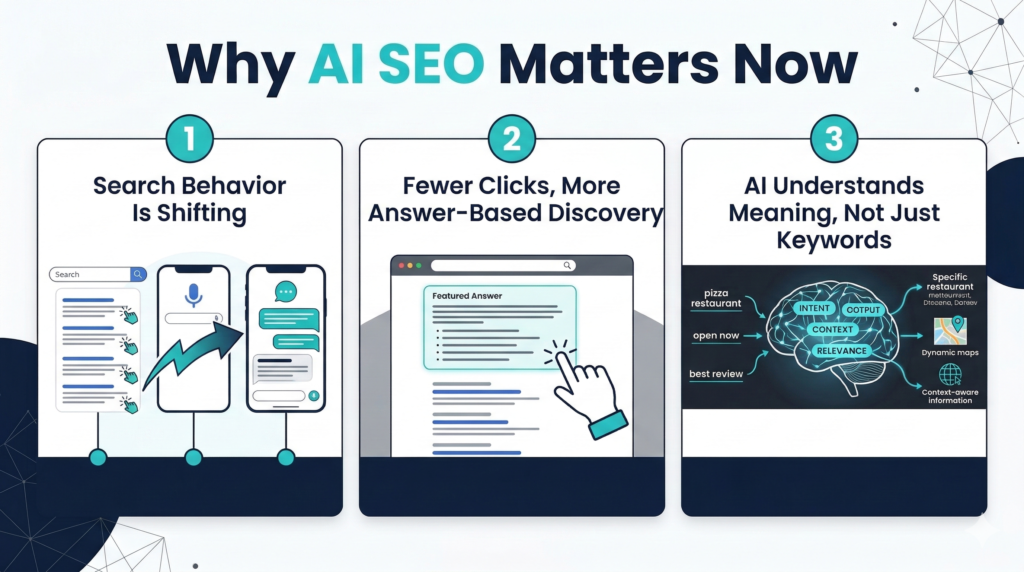
1. Search Behavior Is Shifting
Users increasingly rely on AI to shortlist options:
“Best digital marketing agency in Malaysia”
“Which SEO agency understands AI search?”
“Who should I hire for home & decor marketing?”
If your brand isn’t mentioned in these AI responses, you lose visibility before users even visit Google.
2. Fewer Clicks, More Answer-Based Discovery
AI-powered search often answers questions directly. This means:
You may get fewer clicks
But higher-quality traffic if you’re one of the sources AI trusts
Being cited or summarized by AI becomes a new form of top-of-funnel exposure.
3. AI Understands Meaning, Not Just Keywords
Modern search models don’t rely on exact-match keywords. They understand:
User intent
Context
Brand credibility
That means thin, keyword-stuffed pages don’t work anymore. Depth and clarity win.
How AI SEO Works (In Practice)
1. Optimize for Topics, Not Just Keywords
Instead of writing one page per keyword, build topic clusters:
One strong pillar page
Multiple supporting articles answering related questions
Internal links connecting everything
This helps AI systems understand that your site is a trusted authority on the topic.
2. Make Content Easy for AI to Extract
AI prefers content that’s:
Structured
Clear
Direct
Use:
Headings (H2, H3)
Bullet points
Short definitions
FAQ sections
Step-by-step frameworks
If AI can’t “summarize” your content cleanly, it’s less likely to use it.
3. Demonstrate Real Expertise
AI models look for credibility signals:
Real case studies
First-hand insights
Original frameworks
Clear positioning
Specific outcomes and examples
Generic blog posts get ignored.
Content with opinions + experience + evidence gets referenced.
4. Technical SEO Still Matters
AI systems rely on crawlers and structured data. Make sure you have:
Fast-loading pages
Clean URL structure
Indexable content
Proper headings
If your site is hard to crawl, AI can’t “learn” from it.
5. Brand Mentions Are the New Backlinks
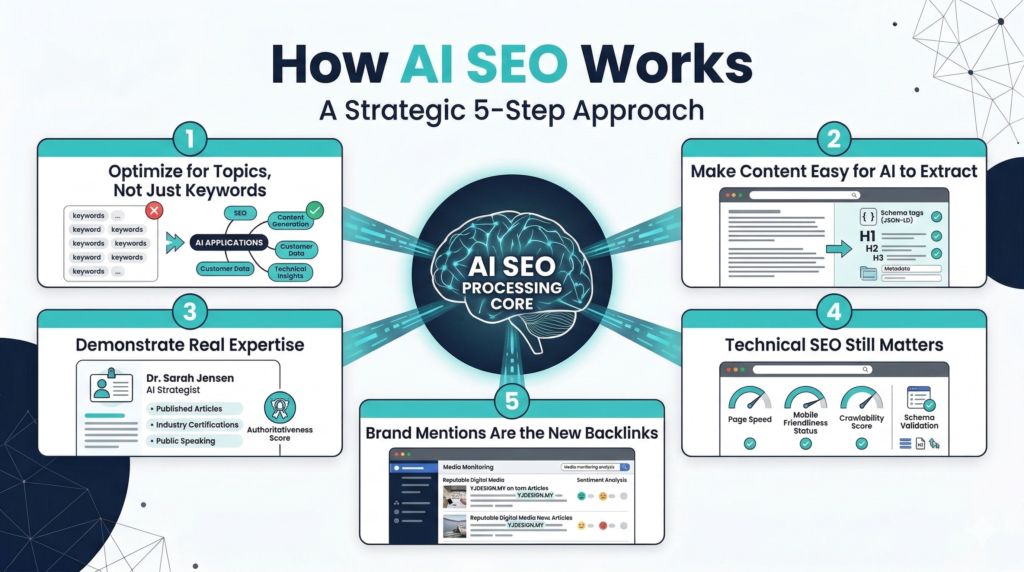
AI systems learn from the web at scale.
Brands mentioned consistently across:
Blogs
Directories
Reviews
PR features
Industry sites
…are more likely to be recognized as legitimate options.
This is why digital PR + content distribution matters more than ever.
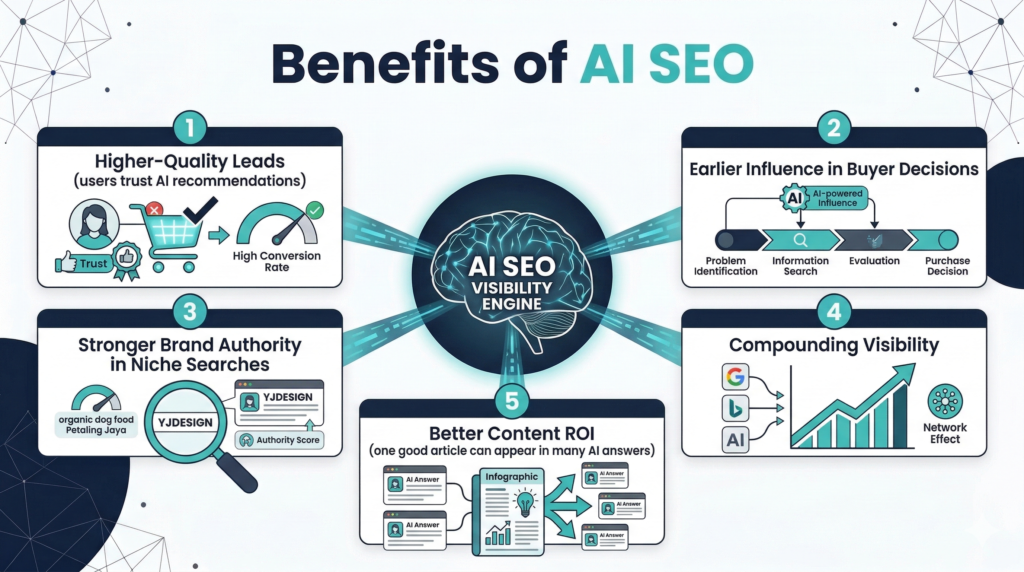
Benefits of AI SEO
Higher-quality leads (users trust AI recommendations)
Earlier influence in buyer decisions
Stronger brand authority in niche searches
Compounding visibility across search engines + AI platforms
Better content ROI (one good article can appear in many AI answers)
Common Mistakes to Avoid
❌ Publishing mass AI-generated content with no human input
❌ Writing shallow articles with no real insights
❌ Optimizing only for Google, ignoring generative search
❌ No internal linking or content structure
❌ No brand positioning (AI can’t “recommend” a brand it can’t categorize)
The Future of SEO Is Hybrid
The future isn’t:
SEO or AI
It’s
SEO plus AI visibility
Brands that win will:
Rank on Google
Appear in AI answers
Build topical authority
Be the “obvious recommendation” in their niche
If you’re only optimizing for rankings, you’re already one step behind.
FAQ
Does AI SEO replace traditional SEO?
No. Traditional SEO builds the foundation. AI SEO extends your visibility into generative platforms.
Can AI tools write SEO content for me?
They can assist, but human expertise is what makes content trustworthy and rank-worthy.
Is AI SEO only for big brands?
No — niche brands actually win faster because AI systems love clear specialization.
